Peri-implantitis treatment
Peri-implantitis is one of the most serious problems that, in most cases, arises due to non-compliance with the rules of hygiene or violation of the implant installation protocol during surgery.
Bacteria that multiply when the patient does not follow the rules of hygiene or «incorrect» implant installation affect the bone tissue surrounding the implant.
When around the neck of the implant on an x-ray, there is a noticeable decline in bone tissue, there is a risk of its rejection. The patient himself cannot notice this, he can only feel an unpleasant taste or see a slight exudate in the area of the implant and the most annoying thing is just to reach out an implant.
Plaque and tartar quickly assemble at the implant. If the patient does not pay due attention to hygiene, the infection penetrates deeper and settles more comfortably, creating conditions for the rejection of the implant.
The causes of peri-implantitis may be:
- non-compliance with oral hygiene after implantation by the patient
- violation of the recommendations of the doctor for the care of the implant
- gums’ injury near the implant
- bad habits
- ignoring routine dental checkups;
- poor quality implant system (poor quality of the material, the manufacturer does not provide a high-quality and reliable connection between the crown and the implant)
- medical error:
- incorrectly planned implantation (without taking into account the quality of the bone tissue, the state of the oral cavity was not assessed)
- incorrectly selected implant diameter
- too much load on the implant
- a thorough assessment of the general state of the patient’s body was not carried out.
- during the operation, the asepsis rules were violated.
It should be borne in mind that complications may occur with any surgical intervention.
So choose
- a doctor whom you trust 100% and who will preliminarily carry out the necessary diagnostics
- a clinic that works only with certified implants with clinically confirmed results.
Symptoms of peri-implantitis
- at the beginning of the disease, there is noticeable redness and gum swelling, tangible discomfort in the zone of the implant.
- bleeding gums.
- formation of a pocket between the implant and the gums (may be accompanied by the allocation of a pungent exudate)
- ultimately, an implantation occurs.
The peri-implantitis is better detected and started treatment in the early stages because further development of the disease only accelerates rejection of the implant.
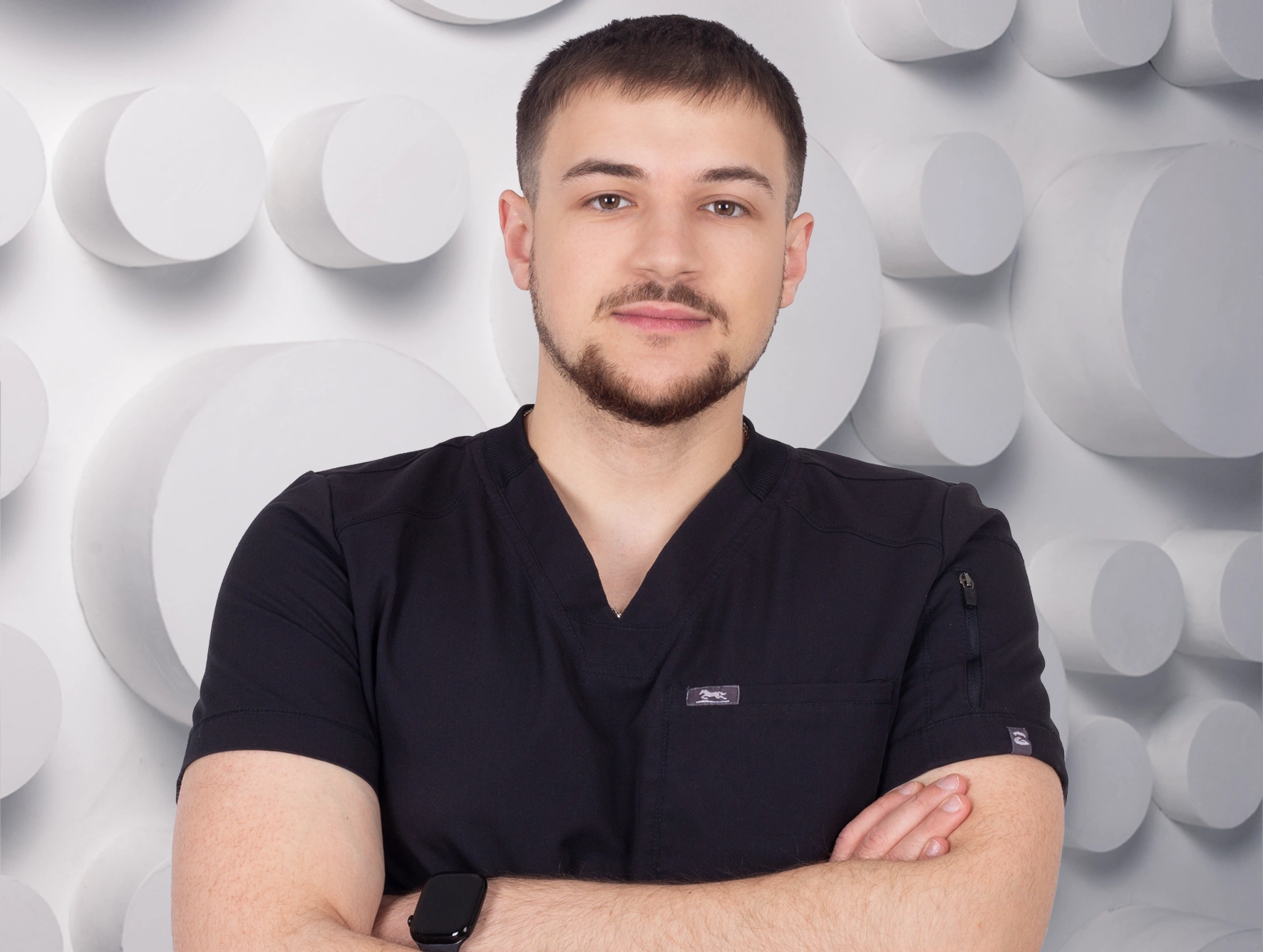
Our dental surgeon
Maksym Nikitiuk
Performs surgical treatments and procedures, including dental implant placement, sinus lift (sinus augmentation), soft tissue grafting, gingival recession coverage, extraction of permanent and primary teeth, and removal of abnormally positioned teeth.
Treatment of peri-implantitis
The success of treatment depends on the stage of the disease development.
At the first stage — not surgical treatment. To do this, apply curets with a special cover, which do not damage the surface of the implant, creating additional vertebral points for attachment of microorganisms.
During the second stage — surgical treatment. The doctor does his best to save the implant.
How to prevent peri-implantritis?
- keep an eye on the hygiene of the oral cavity and visit a dentist for occupational hygiene, with a period prescribed by a doctor.
- do not violate the recommendations of the doctor after implantation.
- pay particular attention to a healthy lifestyle.
- in case of painful sensations, seek medical attention immediately.
At H-Clinic we
- use only quality implants whose quality has been clinically proven for more than 25 years
- we plan individual inspection visits
- we will not leave you alone if you have any problems
- recall a scheduled meeting with a doctor.
Appointment with the doctor
3 important things in the treatment of peri-implantitis
Treatment in several stages
Cleaning the implant and eliminating the causes of inflammation. After 2–3 months, a follow-up examination is performed and, if necessary, surgical intervention.
Comprehensive cleaning of the implant surface
For thorough and effective cleaning, several methods should be combined: special periodontal instruments, fine-particle powders with the AIRFLOW® system, and antiseptic agents.
Regular visits after treatment
Reducing inflammation is only half the work. The other half is professional check-ups every 3 months during the first year after treatment. This helps maintain the result and protects against recurrent inflammation.
Our partners