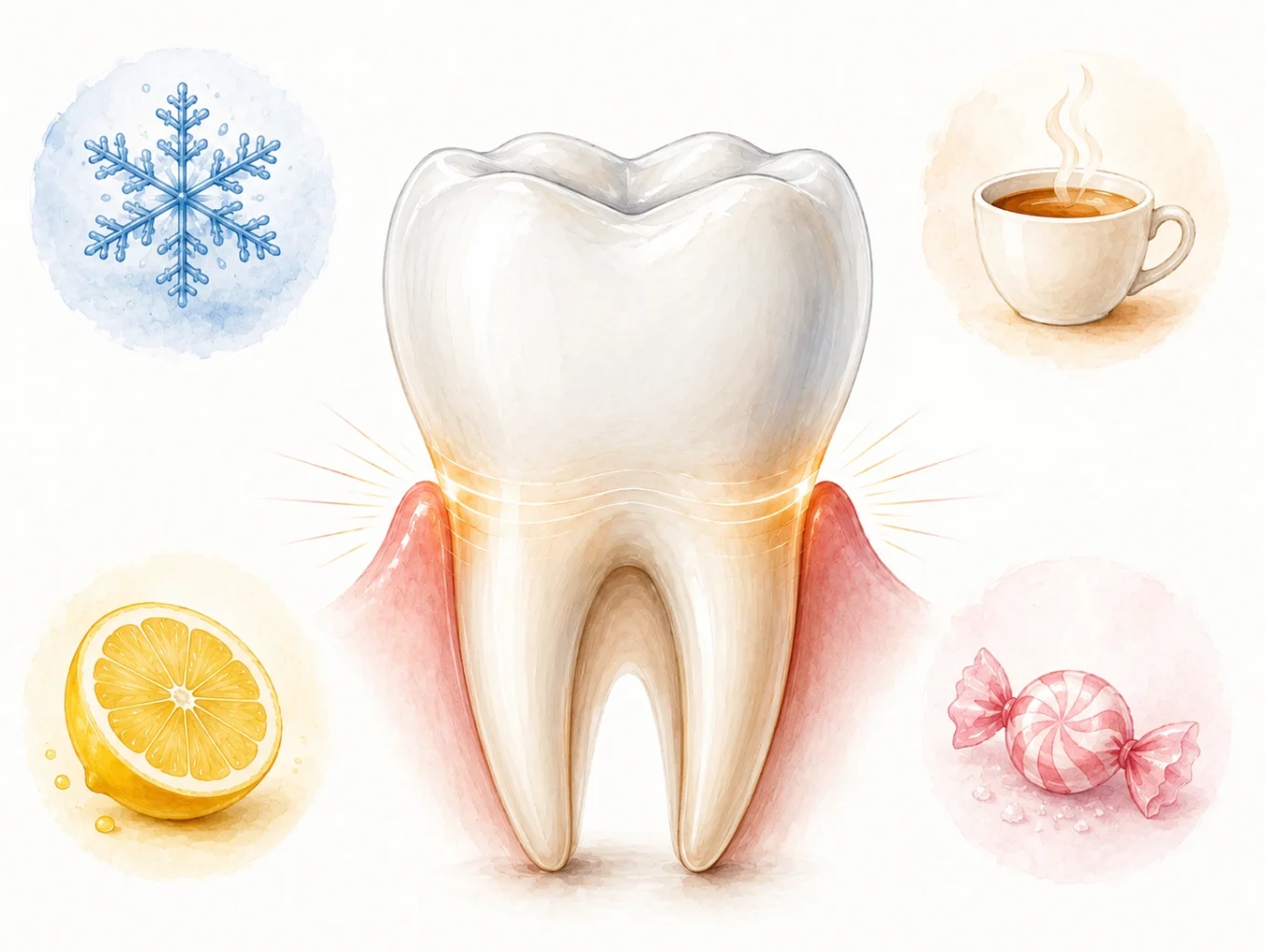
If cold water, ice cream, hot tea, or sour, sugary foods cause severe tooth pain and discomfort in the mouth, it is necessary to understand these symptoms and find ways to solve the problem. Possibly, the problem is increased sensitivity of the tooth enamel (dental hyperesthesia).
This is quite a common, painful condition of the teeth, which creates discomfort in the mouth and makes it difficult to eat and speak normally. The tooth enamel can react painfully to any stimulus.
Increased tooth sensitivity is not a new issue, as it has been recognized for more than 100 years. According to WHO data[1], the prevalence of dental hyperesthesia is growing every year.
If we consider the localization of increased tooth sensitivity, canines come first, then second premolars and molars. The area of the tooth neck is almost always affected.
Dental hyperesthesia is characterized by short-term acute pain resulting from the response of dentin to temperature, tactile and chemical irritants.
The following factors influence the occurrence of tooth hypersensitivity:
- decrease in the protective properties of enamel and, as a result, exposure of dentin. That is, damaged enamel opens up access for irritants to reach the dentin
- increased opening of dentinal tubules. Unprotected and open dentinal tubules are conduits through which any irritant passes. This condition can result from tooth caries or non-carious lesions (cracks, abrasion, erosion, wedge-shaped enamel defect)
- complications after treatment and teeth whitening
- periodontal tissue diseases
- malocclusion (misalignment of teeth)
- improper oral hygiene (incorrect brushing technique, regular use of whitening toothpastes, a hard-bristled toothbrush).
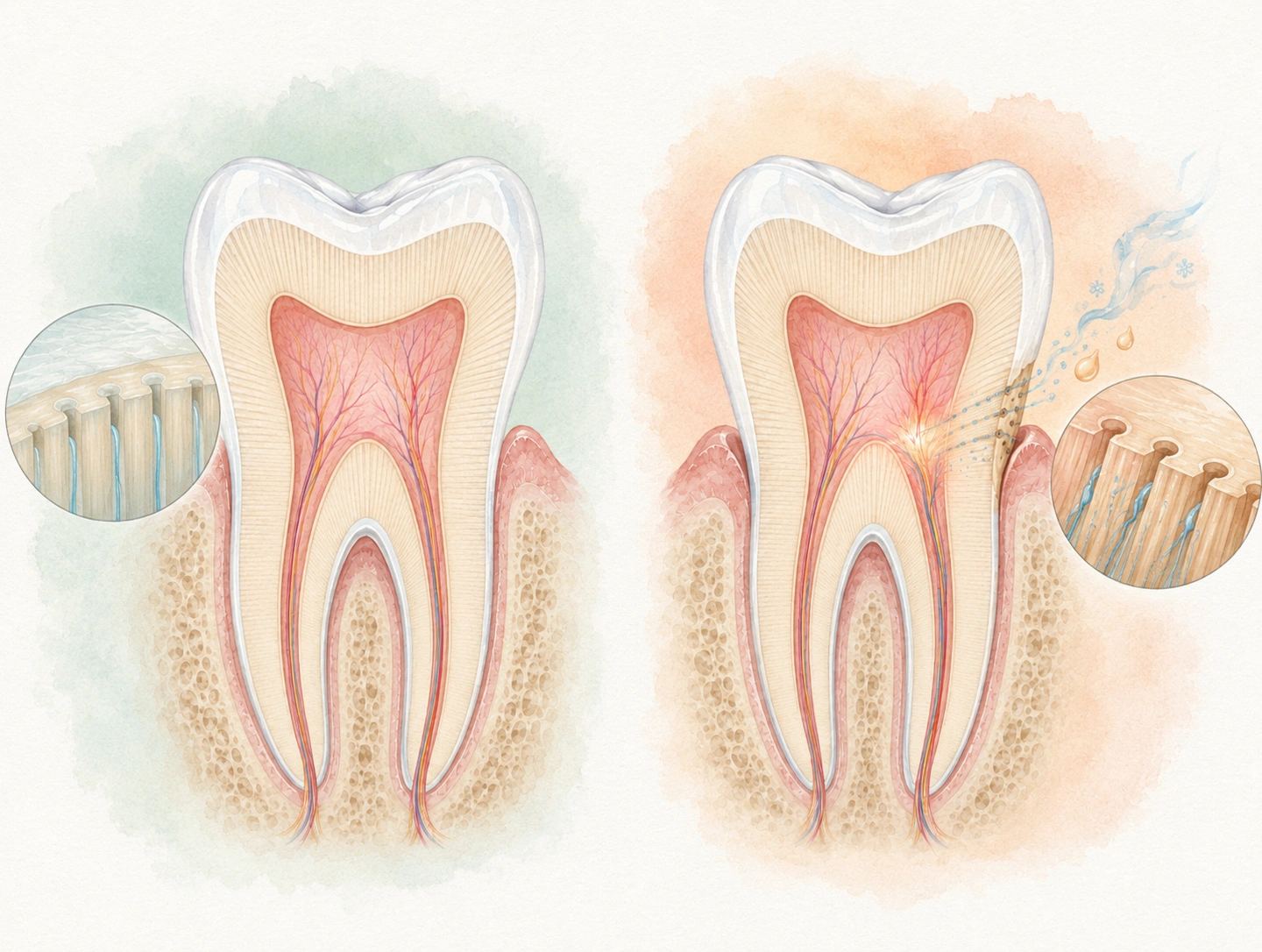
The optimal method for the treatment of dental hyperesthesia is aimed at blocking the hydrodynamic mechanism — reducing the reaction of dental fluid to external stimuli and closing the dentinal tubules. As a result, the tooth enamel becomes stronger and the influence of irritants decreases.
At H-Clinic, we first diagnose the condition of the oral cavity and determine the cause of increased tooth sensitivity, and then select an individual treatment plan.
As a rule, varnishes, gels, and special sealants are used to close the dentinal tubules. To maintain and enhance professional treatment, the dentist prescribes supportive home care — special toothpastes that reduce the volume of dentin micropores by increasing the mineralization of hard tooth tissues.
Toothpastes and increased sensitivity of teeth
There are many types of toothpaste nowadays. Manufacturers promise to reduce sensitivity or even cure it completely. However, a store consultant — or even the buyer — is unlikely to be able to choose a toothpaste that takes the underlying cause of the condition into account.
A dentist with sufficient experience in the treatment of dental hyperesthesia should choose the appropriate toothpaste.
It should be remembered that all toothpastes are divided into two groups: therapeutic and therapeutic-preventive.
Each of these groups has its own indications and contraindications for use.
Indications for toothpastes that desensitize:
- as a symptomatic remedy for non-carious lesions
- for gum recession (exposure of tooth necks in periodontal disease).
Usually, for the treatment of hyperesthesia at home, toothpastes or gels that contain potassium citrate, strontium chloride, and fluoride compounds are used.
Potassium ions diffuse through the dentinal tubules, depolarize nerve endings, and block the transmission of pain impulses, creating a depot around the nerve that protects it from irritants.
Strontium chloride helps improve the structure of tooth enamel and stimulates the production of replacement dentin, which in turn reduces tooth sensitivity.
The action of fluoride ions is based on the partial closure of the dentinal tubules, as a result of which their diameter becomes smaller, the response to stimuli decreases and the enamel is strengthened.
However, it should be remembered that toothpaste in most cases requires systematic and long-term use to achieve a therapeutic effect.
Oral hygiene should be strictly individual; it does not replace but only complements the dentist’s treatment.
If you do not ignore the problem of tooth sensitivity and see your dentist in time, the unpleasant sensations may be only an ordinary, temporary discomfort.
Take care of your teeth and do not pass sentence on your enamel.
[1] Arends J., Duschner H., Ruben J. L. Penetration of varnishes into demineralized root dentine in vitro // Caries Res. — V.31.