
And can it replace professional cleaning of tooth enamel?
Frequently, hoping to save on a visit to the dentist, people use powerful household abrasives such as baking soda and salt as an alternative to professional cleaning. Despite a noticeable number of positive reviews online (claiming that the effect of such extreme tooth cleaning is visible right away), few people stop to consider that soda and salt are in fact powerful abrasives that act on the teeth like sandpaper. Their main drawback is that, along with dental plaque, they scrape away the surface protective layers of the tooth enamel. And that is very dangerous for dental health.
The main negative consequences of using household mixtures of soda and salt as cleaning agents
- a noticeable result only for a short time
- they provide only a superficial result
- they make the tooth enamel thinner
- they cause bleeding gums
- they can cause an allergic rash on the skin around the mouth
- they irritate the mucous membranes of the oral cavity
- by reducing the thickness of the enamel, they increase the teeth’s sensitivity to hot and cold food.
In contrast, there is a high-quality and safe way to get rid of dental plaque and tartar — professional teeth cleaning at a dental clinic, which removes not only plaque but also food residue and dental deposits that serve as a favorable environment for the growth of pathogenic bacteria.
Professional teeth cleaning helps prevent tooth decay and gum inflammation.
We use one of the most effective methods of professional oral hygiene — Air Flow cleaning, which effectively removes stains from coffee, tea, cigarettes, and wine, as well as soft plaque.
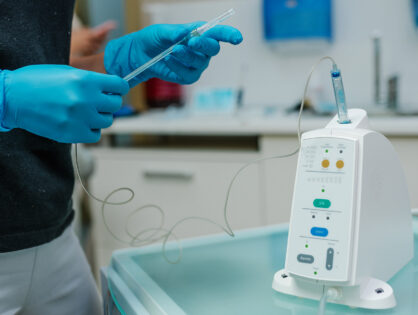
Cleaning is achieved using an air-water jet with powder that is delivered under high pressure through a nozzle. The microparticles in the jet remove contaminants and are then collected by a special suction device together with the water and plaque particles. The entire procedure takes no more than 30–40 minutes.

So what are the benefits of using Air Flow?
The main advantages of teeth cleaning with Air Flow technology are comfort, speed, complete painlessness, high effectiveness, the relative simplicity of the procedure, and an affordable price. Unlike regular brushing with a toothbrush and toothpaste, Air Flow effectively cleans not only the outer enamel surfaces but also the hard-to-reach areas between the teeth.
A single procedure is enough to lighten the enamel by 2–3 shades. The enamel is polished at the same time as it is cleaned. Air Flow powders contain particles of different sizes, because effective cleaning requires both large and small particles (the large ones grind, the small ones polish).
However, Air Flow also has its contraindications, which include:
- chronic bronchitis and bronchial asthma
- being on a salt-free diet, since the powder contains a certain amount of salt
- pregnancy and breastfeeding
- intolerance to the citrus flavor
- acute infectious diseases
- cracks, ulcers, or erosions of the oral mucosa
- any chronic diseases in the acute stage
- HIV infection, hepatitis, or tuberculosis.
In a dentist’s everyday practice, the following types of powders are used for Air Flow technology:
- Sodium bicarbonate (NaHCO₃) is the classic Air Flow powder — the one that started the whole history of this method. Its drawback, however, is the aggressiveness of its particles (which have a geometric shape with sharp edges) toward the mucous membrane of the oral cavity and the surface of the tooth enamel. As a result, there is increased gum bleeding and hyperesthesia of the hard tissues of the tooth.
- Calcium carbonate (CaCO₃) consists of spherical granules, and because they have no sharp edges, the powder particles act gently on the hard tissues of the tooth and effectively remove pigmented and soft plaque.
- Glycine is an amino acid that differs from other powders in its mild, gentle effect on the soft tissues of the mouth and the tooth surface. It can be used in children aged 6 and older and in people with periodontal disease.
At H-Clinic, we use cleaning powders such as calcium carbonate and glycine. Oral hygiene with the Air Flow method is nowadays called a Dental SPA, because right after the procedure you enjoy fresh breath, a pleasant aftertaste, smooth teeth, and the natural whiteness of the enamel.
The optimal frequency of the procedure is once every 6 months to maintain the therapeutic effect, which will prolong the health and beauty of your smile.
Contact us.